
Peak Season Shipping: How to Prevent Shipping Damage When Volume Spikes
· by Redaktion
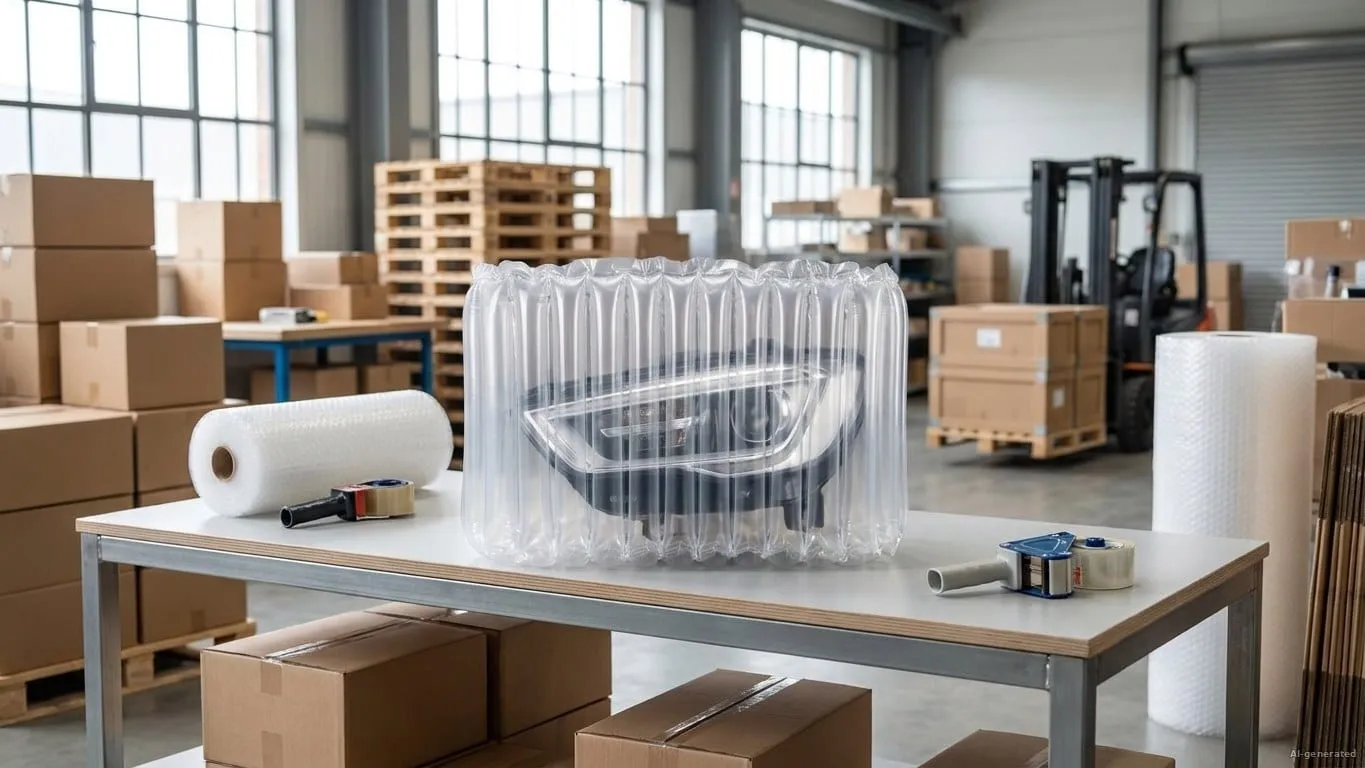
The short answer: To prevent shipping damage when volume spikes, you win before the truck ever moves. In a measurement study, most impacts happened while packages were loaded and unloaded at sorting hubs, and edges, corners, and the bottom of the box took the hardest hits (Kim et al., 2024). Match your box strength to the weight, immobilize the contents so nothing shifts, and protect corners and edges first, then verify every parcel with a quick shake test before it ships.
Peak season does not forgive a weak pack. US carriers moved an estimated 2.3 billion parcels during the 2025 peak, about 5% more than the year before (ShipMatrix, reported by FreightWaves). Every one of those parcels passes through the loading, unloading, and sorting steps where most measured impacts happen (Kim et al., 2024), so a weak pack gets exposed at scale. The good news: where and how parcels get hit is well documented, so a repeatable packing standard is your strongest lever for keeping damage in check even when your outbound queue is at its longest.
Where does shipping damage actually happen during peak?
It is tempting to picture damage as a truck hitting a pothole. The measured reality is different. In a study of 60 small and medium parcels moving through South Korea's ground parcel network, most shock events occurred while packages were being loaded and unloaded at hub and sub terminals, not in transit (Kim et al., 2024). The same study found impacts land far more often on edges (about 50%) and corners (about 35%) than on flat faces, and roughly 80% of impacts hit the bottom of the box or the area around it.
Two takeaways follow. First, the researchers counted fewer drops in South Korea than earlier studies found in Europe and the US, and they attribute this to fewer handling points: Korean parcels mostly pass through one hub and one sub terminal, while US and European parcels are more likely to go through several (Kim et al., 2024). Second, your protection budget should go to corners, edges, and the bottom first. That is where UNIQBAG designs its air column packaging to work: 360 degree air column protection wraps the product and holds it off the walls of the box, so an edge or corner drop meets a cushion of air first (manufacturer description). UNIQBAG states a maximum pressure loss of 8% over 180 days (manufacturer data). This structure is also called air chamber packaging.
How do I pack parcels to be break-resistant, not just ready for a smooth ride?
Start with the box. Carrier guidelines tie corrugated strength to weight: UPS matches an Edge Crush Test (ECT) or Burst rating and the number of flute walls to how heavy the parcel is, and recommends double-wall board once a package passes about 81 lbs (UPS Packaging Guidelines). A box rated for a 10 lb order falls far short of the UPS guideline for a 90 lb one (ECT 32 single wall versus ECT 61 double wall), and a box that crushes or bursts can no longer protect what is inside.
Next, immobilize the contents. The USPS mailing standards are blunt: the contents must not be able to move inside the box, and multiple items in one carton have to be cushioned against each other and against outside force (USPS DMM 601). Loose fill has to overfill the carton before you close it so the item cannot shift, and hollow or fragile items should be cushioned inside as well as out (USPS DMM 601; USPS Postal Explorer).
Then seal and verify. Close the opening and every seam with tape at least 2 inches wide, and skip masking tape, cellophane tape, and string (USPS Postal Explorer). Finally, run the test that costs nothing: close the box and shake it. If you hear anything move, add cushioning until it goes silent (USPS Postal Explorer). Building a fixed standard around these steps helps keep your damage rate in check while your volume climbs.
Related to this article: Air Column Packaging in Action Discover UNIQBAG air column packaging in action: Secure inflatable protective packaging for laptops, wine, toner & displays. The modern alternative to bubble wrap. Reduce DIM weight & shipping costs. More about Air Column Packaging in Action →
How do I keep damage rates low without slowing the line?
The tension during peak is real: every extra second per parcel multiplies across thousands of orders. The answer is a pack method that is both protective and fast to apply. Inflatable air-chamber packaging is inflated on demand, so you store it flat and blow it up only as you pack, which is why UNIQBAG cites up to 99% less storage volume: the bags are shipped and stored flat and inflated at the packing station (manufacturer data). UNIQBAG also cites up to 30% lower dimensional weight (manufacturer data). Carriers calculate dimensional weight from the box's length, width, and height, so the saving comes from shipping in a smaller box, and that is a direct cost lever when you ship at volume.
Consistency matters more than heroics. The researchers behind the parcel shock study point out that lowering damage rates takes packaging that is tested in a properly simulated distribution environment and then optimized based on the results, an approach they say can also cut overused material (Kim et al., 2024). In practice, that means picking one validated pack profile per product family and running it every time, so a temp worker on day two packs the same box a veteran does. If you want to pressure test your own profile before peak, a custom air column solution can be tuned to your specific SKUs and box sizes.
Frequently Asked Questions
How do I pack a parcel to be break-resistant? Match the box strength to the weight, surround the product on all sides so it cannot move, and protect the corners, edges, and bottom first, since those take most of the impact (Kim et al., 2024). Then close the box and shake it: if anything shifts, add cushioning (USPS Postal Explorer).
Where do parcels take the most hits? In a measurement study, most impacts happened during loading and unloading at sorting terminals, not on the road, and most often on the edges, corners, and bottom of the box (Kim et al., 2024). The researchers link a lower impact count to fewer hub handoffs.
Does a "Fragile" label protect my shipment? The USPS suggests marking fragile shipments, but the measured impacts happen mostly during handling, so a label is not a substitute for proper cushioning (USPS Postal Explorer; Kim et al., 2024). Protect the parcel physically first.
Do I need lab testing for my packaging? It depends on your channel. Even outside Amazon, carriers point to performance testing: UPS calls its box strength table a guideline only and says packaged products should be tested to ISTA Procedure 3A. ASTM D7386 is the standard lab practice for single-parcel shipments up to 150 lbs (68 kg), and Amazon's Ships in Product Packaging program requires an ISTA 6 transit test, with an outside lab report for items over 50 lbs or those with liquids or sharp parts (ASTM; Amazon). The shake test is a quick daily check on the packing line, not a replacement for that test.
What box strength do I need for a heavy order? UPS ties corrugated strength to weight, for example ECT 32 or Burst 200 single-wall up to 30 lbs, moving to double-wall board above about 81 lbs (UPS Packaging Guidelines).
Volume will keep spiking every peak season, and a written, repeatable pack standard is your best lever for keeping damage rates low: right-sized box, immobilized contents, corners and edges protected, shake test passed. Want to see how a validated air column profile performs against your own drop conditions? Order the UNIQBAG test kit and run it on your real SKUs before peak hits.
Quellen
- Measurement and Analysis of the Shock and Drop Levels Experienced by Small and Medium Packages in the Korean Parcel Delivery System (Kim, Horvath, Lee, 2024)
- USPS Domestic Mail Manual (DMM) 601: Mailability
- USPS Postal Explorer: Preparing Packages
- UPS Packaging Guidelines
- ASTM D7386-25: Performance Testing of Packages for Single Parcel Delivery Systems
- Large parcel carriers improved on-time delivery during 2025 peak season (FreightWaves, ShipMatrix)
- Amazon: Ships in Product Packaging
Transparency note: This article was created with AI assistance and reviewed by our editorial team. The article image is AI-generated.